Athletic body shapes often have strong shoulders, a straighter waist, or visibly developed arms and legs. Softer silhouettes can add contrast without disguising that structure. Draped fabric, curved seams, fuller skirts, and relaxed textures create movement that makes an athletic outfit feel less rigid while keeping its clean lines.
Start by Creating Contrast With Structure
If the body already has naturally defined lines, repeating sharp tailoring from head to toe can produce a strong geometric effect. That can look excellent, but it isn’t the only option.
Softness creates visual contrast. A fluid blouse with tailored trousers or a structured tank with a bias-cut skirt combines two different kinds of shape in one outfit.
Use Draping Where You Want More Movement
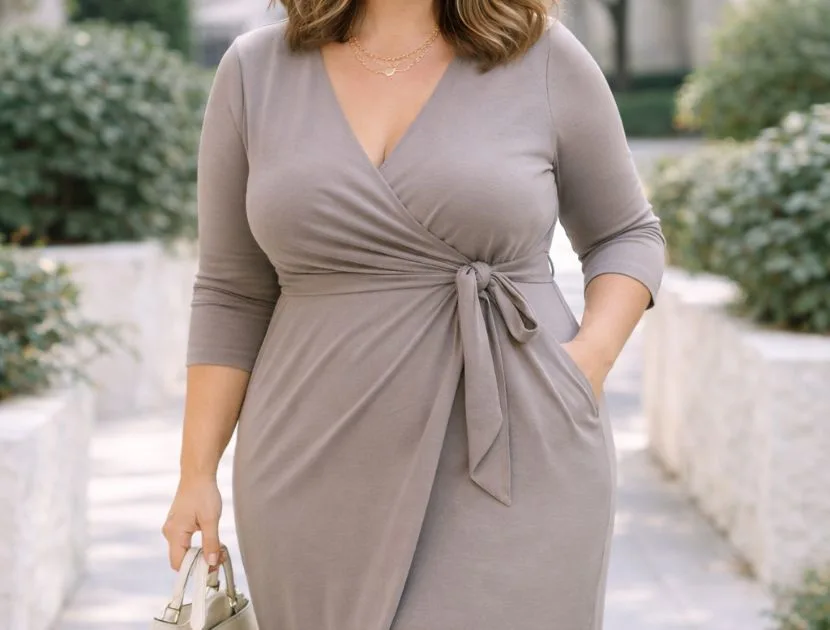
Cowl necklines, gathered sleeves, pleats, wrap fronts, and softly falling skirts introduce curves through fabric rather than through tight fit.
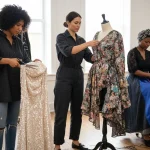
Fashion examples on style and clothing coverage can help show how designers combine athletic proportions with softer materials. The useful detail to study is where the fabric begins to move away from the body.
Add Definition Without Forcing a Waist
A waist doesn’t have to appear dramatically narrow for an outfit to look balanced. Slightly cropped jackets, high-rise trousers, gentle tucks, and curved side seams can suggest definition naturally.
Belts can help, but they aren’t mandatory. Sometimes the cleanest effect comes from a top ending near the waistband rather than cinching the middle tightly.
| Styling Element | Effect | Good Pairing |
|---|---|---|
| Soft blouse | Adds movement | Straight trousers |
| Full skirt | Creates lower-body volume | Fitted top |
| Cropped jacket | Suggests waist | High-rise bottoms |
| Draped dress | Softens straight lines | Minimal accessories |
Balance Strong Shoulders With the Lower Half
Athletic frames sometimes carry more visual width through the shoulders. Adding volume below can create balance without hiding the upper body.
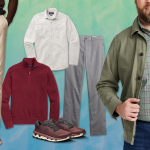
Wide-leg trousers, A-line skirts, flared jeans, and pleated styles are useful options. Looking through clothing silhouette ideas may help reveal how lower-body volume changes the overall shape even when the top stays simple.
Necklines matter too. Scoop, V, sweetheart, and asymmetrical necklines can interrupt a broad horizontal shoulder line.
Use Detail Selectively
Ruffles, gathers, curved prints, and textured fabrics can add softness, but too many decorative elements may overpower the clean quality that often suits athletic frames.
Beauty choices can repeat that idea. Makeup style inspiration may be useful for coordinating a softer clothing look with equally balanced makeup rather than combining several dramatic elements at once.
One statement detail is often enough. A gathered sleeve or full skirt can change the entire silhouette without requiring additional decoration everywhere else.
Where Athletic-Shape Advice Can Fail
Some styling guides assume an athletic body must always be made to look curvier. That turns personal style into correction rather than choice.
Another mistake is abandoning structured clothing completely. Sharp blazers, straight trousers, and fitted tanks can be excellent on athletic frames. Softer silhouettes are simply another tool for creating contrast when a less angular look is desired.
Frequently Asked Questions
What dresses suit an athletic body shape?
Wrap dresses, fit-and-flare designs, bias-cut dresses, gathered styles, and structured columns can all work. Choose according to whether you want to emphasize the body’s natural lines or introduce additional softness.
Can athletic frames wear shoulder pads?
Yes. Shoulder pads can create a strong fashion-forward silhouette. If you want more balance, pair them with wider trousers, fuller skirts, or another element that adds visual weight below the waist.
How can I make a straight waist look more defined?
Try high-rise bottoms, cropped outerwear, partial tucks, shaped seams, or gentle belts. Creating a clear transition between the upper and lower body can suggest definition without requiring tight clothing.
Choose Softness as an Option, Not a Rule
Athletic styling becomes more flexible when softness is used for contrast rather than correction. Mix fluid and structured pieces, introduce definition in selected areas, and decide whether you want to emphasize or soften your natural lines. The strongest outfit is the one that makes those choices look intentional.