
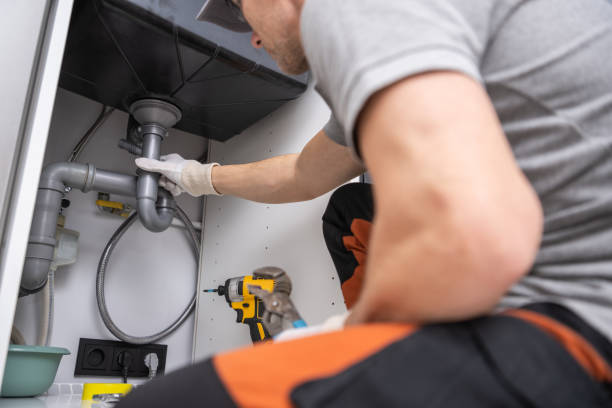
There is a specific kind of expensive that only homeowners know about. It is not the repair bill. It is the bill you pay for a repair that never happened.
It goes something like this. On a July afternoon, you open the cabinet under the guest bathroom sink and find standing water. You do the obvious thing and call a plumber. A licensed plumber arrives, spends twenty minutes under the vanity, runs the faucet, checks the trap, pressure checks the supply lines, and finds nothing wrong. He charges you the service call fee, tells you everything looks fine, and leaves. Two days later, the water is back.
Nothing was wrong with your plumbing. Your air conditioner was leaking into your bathroom.
That sounds absurd right up until you understand how Texas homes are actually built. And it is only one of a dozen situations where the trade you instinctively call is the wrong one, where you pay a service fee to learn nothing, and where the real problem keeps running while you wait for the second appointment.
This guide is about closing that gap. Not so you can fix the leak yourself, but so that the first person you call is the right person. Water leak repair is cheap when it starts with an accurate diagnosis and expensive when it does not, and the diagnosis is where most homeowners lose the money.
Why Homeowners Misdiagnose Water Almost Every Time
The core problem is simple: water is a traveler, and the place you see it is almost never the place it came from.
Water follows gravity, then it follows the path of least resistance, and in a house that path is framing. It runs along the top of a ceiling joist, sideways across a truss chord, down the outside of a pipe, and drops out through the first available opening: a can light, a seam in the drywall, the gap where a vent penetrates. A stain in the middle of your living room ceiling can easily originate fifteen feet away and one floor up.
On top of that, there are at least five separate systems in a typical Texas home capable of putting water where it should not be, and they are handled by five different trades:
- The supply system: that carries clean water under pressure to your fixtures
- The drain system: that carries used water away, unpressurized, by gravity
- The HVAC system: which pulls gallons of water out of your air every day and has to get rid of it somewhere
- The building envelope: roof, flashing, windows, and grading, which are supposed to keep rain out
- The appliances: dishwashers, refrigerators, washing machines, water heaters, each with its own supply and drain
A homeowner sees water and sorts it into one category: plumbing. That single reflex sends more water leak repair calls to the wrong trade than any other cause. And in Texas, the most common version of that mistake has a very specific and very frustrating shape.
Lookalike 1: The Bathroom Sink That Floods Because of Your Air Conditioner
In a large share of Texas homes, particularly those built in the last several decades with the air handler in the attic, the air conditioner’s condensate drain does not run outside. It ties into the drain of a bathroom sink, usually the bathroom closest to the attic access, and usually a guest bath that nobody sets foot in.
This surprises people, so it is worth explaining why it is done that way.
Your air conditioner is a dehumidifier that happens to also cool. On a humid August afternoon, a residential system pulls a meaningful volume of water out of your indoor air, and every drop of it has to go somewhere. Terminating that line outside creates its own set of Texas problems: it discharges water right next to a foundation sitting on expansive clay, which is exactly what you do not want, and it leaves standing water that breeds mosquitoes. So the line gets routed to the sanitary drain instead, tied in above the sink’s P-trap so that the trap blocks sewer gas from traveling backward into your air handler.
Now the failure mode. Condensate water is not clean water. It carries dust and biological material off the evaporator coil, and in warm weather, it grows algae and biofilm inside the drain line. The slime accumulates until the line restricts. Once it restricts, one of three things happens, and none of them look like an HVAC problem:
- Water backs up through the tie-in and overflows the sink onto the vanity floor and into the cabinet.
- Water backs up at the drain pan in the attic and trips the float switch, and your AC simply shuts off on the hottest day of the year.
- Water overflows the pan quietly and comes through the ceiling below instead.
Every symptom points at plumbing. None of the causes are plumbing.
How to Tell
The tell is correlation with runtime. Does the water show up on hot days and stay away on mild ones? Does the sink gurgle when the system kicks on? Is it a sink nobody uses, suddenly backing up in July? That is a condensate problem, and an HVAC technician usually clears it in well under an hour. A plumber can snake the drain and will sometimes get you a temporary result, but if the restriction is up inside the condensate line itself, the plumber is working the wrong end of the pipe.
The Variant Almost Nobody Diagnoses Correctly
There is a third version worth knowing, because it fools everyone. Sometimes there is no clog at all. The condensate running through that pipe is cold, the inside of a closed vanity cabinet in a Texas summer is warm and humid, and the pipe sweats exactly the way a glass of iced tea sweats. You get a damp cabinet floor, a swollen particleboard base, and eventually mildew, from a system that is working perfectly.
The fix is not a plumber and not really an HVAC tech. It is a few dollars of pipe insulation and someone willing to crawl under a vanity, which is to say it is a handyman job. Homeowners have paid for leak detection and a full water leak repair quote to arrive at that answer.
Lookalike 2: The Ceiling Stain
A brown ring on a ceiling is the single most misread symptom in a house. Work it by location and by timing.
If the stain is directly beneath an upstairs bathroom, it is probably plumbing: a supply line, a failed wax ring at the toilet, a shower pan that has given up, or a tub drain connection. If it correlates with someone showering, that narrows it further.
If the stain is beneath an attic with no bathroom anywhere above it, and it is cooling season, look hard at the air handler before you call a plumber. That drain pan exists precisely because this failure is expected.
If the stain only appears or grows after rain, it is not plumbing and it is not HVAC. It is the roof, the flashing, a vent boot, or a window. Plumbing does not care whether it is raining.
And if the stain is directly beneath a second-floor water heater, treat it as urgent rather than curious.
Lookalike 3: Water at the Water Heater
Water on the floor around a water heater has at least four different explanations, and the correct response is different for each one.
If the water is coming out of the open end of a pipe running down the side of the tank, that is the temperature and pressure relief valve doing its job. The valve is not the problem. The valve is telling you that something else is wrong, usually excessive pressure in the system, often related to thermal expansion, and sometimes a failing thermostat. Replacing the valve without diagnosing the pressure is treating the smoke alarm instead of the fire.
If water is weeping from the base of the tank itself, the tank is failing and you are on a clock. If there is water in the drip pan but the tank is dry, look up: in many Texas attics the water heater pan and the AC condensate line share a drain. And if the tank is fine and the pan is fine but there is a puddle nearby, check what else is up there with it.
The Ten-Minute Triage Anyone Can Run
Before you call anyone for water leak repair, four tests will tell you more than most homeowners learn in a week of worrying. None of them require tools.
Test 1: The Meter Test. This Is the Important One.
Turn off every fixture and appliance in the house that uses water. Then go find your water meter at the street and look at the low-flow indicator, which is usually a small triangle, star, or dial that spins on tiny amounts of flow.
If it is moving, you are losing pressurized water somewhere. That means supply side: a slab leak, an irrigation leak, a running toilet, a hidden supply line. If it is completely still, your pressurized plumbing is intact, and whatever you are looking at is coming from a drain, from condensate, from the roof, or from an appliance.
That one test cuts the problem in half, and it is the single most useful thing a homeowner can do before picking up the phone.
Test 2: The AC Test
If the meter is still and it is cooling season, turn the air conditioning off at the thermostat and wait a couple of hours. If the water stops appearing, you have your answer, and it is not a plumber.
Test 3: The Hot Side Isolation
If the meter is moving and you have a warm spot on the floor, close the cold water inlet valve at the top of your water heater and watch the meter again. If it stops, the leak is on the hot water line. That matters more than it sounds: it narrows the search area dramatically and it often opens up less invasive repair options.
Test 4: The Rain Test
Keep a note of when the water appears. If the answer is always within a day of rain, stop thinking about pipes entirely. You have an envelope problem, and the trade you need works on the outside of the house, not the inside.
When to Stop Diagnosing and Shut It Off
Everything above assumes you have the luxury of thinking. Sometimes you do not, and it is worth being clear about where the line is.
If water is actively running, stop diagnosing and shut off the main. The cost of being wrong about the source is measured in minutes of flow. A few things worth knowing before that moment arrives rather than during it:
- Know where your main shutoff is now, in daylight, while nothing is wrong. Most people learn where it is while standing in the dark in a panic, and a surprising number of homeowners have never located theirs at all.
- If the tank drains, kill power or gas to the water heater. An electric element that fires in an empty tank burns out fast, turning a leak into a leak plus a replacement.
- Do not stand under a bulging ceiling. Drywall holding water is heavier than it looks and it comes down all at once. Puncture it deliberately from the side with a bucket underneath, or wait for someone who does this for a living.
- If water is anywhere near a panel, a fixture, or an outlet, kill the breaker before you go near it with a towel.
Document It Before You Mop, Because of One Word in Your Policy
This is the part that costs people the most money, and almost nobody knows it until they are living it.
Homeowners policies are generally built to cover water damage that is sudden and accidental. A supply line bursts, a water heater fails, a fitting lets go: that is the pattern carriers expect to pay for. What many policies exclude is the opposite: water that seeped, dripped, or leaked over an extended period. Different carriers write that exclusion differently. Some use language about weeks, months, or years. Some name a specific window, commonly fourteen days or more. Some carriers do not include the exclusion at all, and some offer a repeated leakage and seepage endorsement that buys the coverage back, often with its own limit.
Which means the argument you are most likely to have with your carrier is not whether water damaged your home. It is how long the water was there. And the person answering that question is frequently a vendor sent by the carrier, forming an opinion about the age of a leak from the condition of the materials.
Building the Record
So before you clean anything up, build the record:
- Shoot first. Photograph and video everything while it is still wet, with timestamps intact. Every affected room, not just the obvious one. Ceilings, baseboards, cabinets, flooring, adjacent spaces.
- Fix the timeline. Write down a last known dry date. When did you last look in that cabinet, walk that room, use that bathroom? A specific date you can defend is worth more than a general impression.
- Keep the part. Photograph the failed component, and if it gets removed, keep it. The burst hose, the corroded fitting, the split valve. That object is evidence about how the failure happened.
- Save every receipt. Receipts for fans, dehumidifiers, emergency plumbing, a hotel night. Mitigation costs are usually recoverable, and they also demonstrate that you acted promptly, which matters on the mold question.
- Start drying immediately. Mold coverage frequently hinges on whether wet materials were dried quickly. The commonly cited window is twenty-four to forty-eight hours. Being able to show you started drying immediately is worth real money later.
One honest caveat: policy language varies enormously between carriers and endorsements, and courts have split on how these exclusions apply. Nothing here is a substitute for pulling out your own declarations page and calling your agent to ask directly whether you have a seepage exclusion and whether an endorsement is available. That is a fifteen-minute phone call that most homeowners never make until the week it is too late.
The Real Problem is Not the Diagnosis
Here is the honest conclusion of everything above.
You should not have to know any of this.
A decision tree is a wonderful thing to have on a Tuesday morning when you are curious about a stain. It is close to useless at eleven o’clock on a Sunday night when water is coming through your kitchen ceiling, you are standing in it, you have three phone numbers of uncertain quality, and the only thing you actually know is that every minute costs money.
The skill is not knowing that condensate lines tie into lavatory drains. The skill is having one number to call where somebody else already knows, has already vetted the plumber and the leak detection specialist and the HVAC tech and the restoration crew, can tell which one you need from the symptom you are describing, and will stay on it until the ceiling is dry and the drywall is patched and the claim is documented.
Water leak repair done properly is a coordinated process, not a phone call. That is the entire difference between owning a problem and handing one off.
Kincaid Home Management coordinates emergency water leak repair for homeowners across Dallas and Austin, dispatching the right trade for the symptom the first time and overseeing the work from the first call through final restoration and claim documentation. Premier and Concierge members have 24/7 access.