
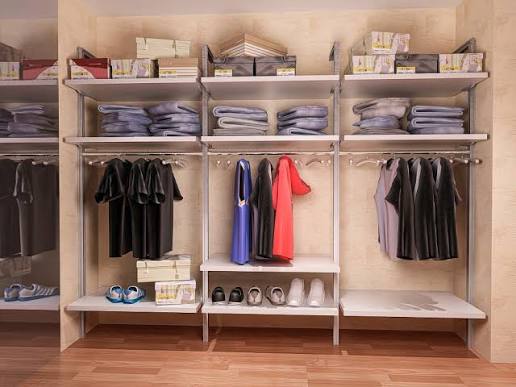
Limited hanger space doesn’t always mean you need a bigger closet. Hanging the wrong garments can consume valuable rail space while also damaging clothing. Knitwear is one of the easiest categories to move into folded storage because sweaters and other knitted pieces often hold their shape better when supported rather than suspended from hangers.
Decide Which Clothes Truly Need Hangers
Prioritize hangers for garments that wrinkle easily or benefit from vertical storage. Shirts, blouses, dresses, tailored trousers, jackets, and structured pieces often deserve rail space more than sweaters.
Bulky knitwear can occupy several times the width of a lightweight shirt. Moving a small sweater collection to shelves may free a noticeable amount of room.
Looking through practical clothing ideas may also help when deciding which wardrobe categories work best folded and which ones benefit from staying visible on hangers.
Fold Knitwear to Protect Its Shape
Knitted fabrics can stretch when their full weight hangs from the shoulders. Heavy sweaters are especially likely to develop stretched necklines or hanger bumps.
Fold each sweater with sleeves placed neatly across the body, then fold the garment into a size that suits your shelf or drawer.
| Garment Type | Better Storage | Reason |
|---|---|---|
| Heavy sweater | Folded shelf | Limits stretching |
| Cardigan | Folded or supported | Protects shoulders |
| Fine knit | Drawer or shelf | Saves rail space |
| Structured jacket | Hanger | Maintains form |
Use Shelves Without Building Unstable Stacks
Tall sweater towers seem efficient until you need the piece at the bottom. Pulling one item out can collapse the entire stack.
Keep stacks short and divide wide shelves with shelf separators if needed. Another option is vertical drawer folding, which allows you to see several pieces at once.
Storage-focused wardrobe inspiration can provide useful visual ideas for separating folded categories without overcrowding the available surface.
Rotate Knitwear With the Seasons
Not every sweater needs premium storage all year. Warm knits can move to secondary storage during hotter months, while lighter layers remain accessible.
Before storing seasonal clothing, make sure pieces are clean and completely dry. Use containers appropriate for your environment and available storage space.
Following seasonal style ideas may also help you decide which weights, textures, and layering pieces deserve immediate access during different parts of the year.
Why Folding Can Still Fail
Folding isn’t automatically better if garments are crushed into overcrowded drawers. Compression makes clothing harder to see and can create deep creases.
Another mistake is folding delicate knitwear while damp, which may encourage distortion or unwanted odors. Give each piece enough space, avoid unstable piles, and review rarely worn sweaters occasionally. A drawer full of unused knitwear is still wasted storage even if it’s beautifully folded.
Frequently Asked Questions
Is it bad to hang sweaters?
Some light sweaters can be hung with suitable support, but heavier knitwear may stretch under its own weight. Folding is generally the safer choice when shoulder distortion or hanger marks are a concern.
How many sweaters should I stack together?
There isn’t a fixed number. Keep stacks low enough that you can remove one sweater without disturbing everything above it. Thicker garments usually require shorter stacks than fine knits.
Can I store knitwear vertically in drawers?
Yes, if the drawer is deep enough and the folding method doesn’t compress the fabric excessively. Vertical storage can make individual sweaters easier to see and remove without disrupting neighboring pieces.
Give Rail Space to the Clothes That Need It
Closet space improves when storage methods match the garment instead of following habit. Move bulky and stretch-prone knitwear onto shelves or into drawers, keep stacks manageable, and reserve hangers for clothing that benefits from vertical support. You may discover that the closet wasn’t truly too small; the available space was simply being used inefficiently.