A split door frame can worsen each time the door closes, especially when damage surrounds a hinge or strike plate. Early repair may prevent a small crack from becoming a loose section of trim or jamb. Before filling anything, determine whether you’re dealing with surface damage or wood that carries hardware and needs stronger reinforcement.
Identify Which Part of the Frame Is Damaged
Door trim, also called casing, mainly covers the gap around the frame. The jamb is more important structurally because hinges and strike hardware are often fastened to it.
A crack in decorative casing can be simpler than a split running through screw holes. While reviewing interior repair planning, keep that distinction in mind because a filler-only repair may be unsuitable around load-bearing hardware.
Check Whether the Door Still Hangs Correctly
Open and close the door slowly. Watch for sagging, rubbing, or movement around the hinges.
If screws pull away from the jamb as the door moves, the damaged wood needs to be stabilized before cosmetic finishing.
Repair Small Nonstructural Splits
For a clean split in solid wood, gently open the crack only enough to introduce suitable wood glue. Work the adhesive into the split, then clamp the area without crushing or distorting the frame.
Wipe away excess glue before it hardens. Homeowners comparing wider maintenance tasks may encounter exterior trim reading, but indoor frame repairs still depend heavily on dry, solid wood and good clamping contact.
Allow the adhesive to cure according to its instructions before sanding or reinstalling stressed hardware.
Reinforce Damage Around Screws
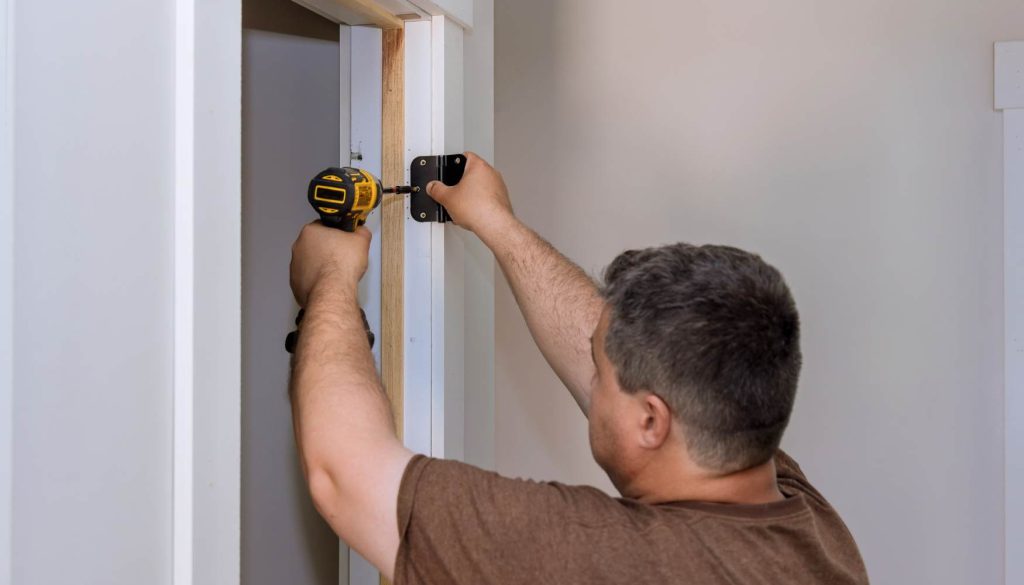
Loose hinge or strike screws require more than surface filler. If the wood fibers are badly damaged, the repair must give the screw solid material to grip.
| Damage | Repair Goal | Important Check |
|---|---|---|
| Fine surface crack | Close the split | Wood remains solid |
| Split near hinge | Restore screw support | Hinge stays aligned |
| Broken trim | Rebuild appearance | Jamb unaffected |
| Soft or crumbling wood | Find the cause | Possible moisture damage |
Depending on the situation, repair may involve replacing damaged wood, reinforcing the jamb, or using appropriate longer fasteners where construction allows. Avoid sending screws blindly into areas where wiring or other concealed materials could be present.
Broader project research sometimes includes patio project reading, but door-frame reinforcement should be based on the actual wall and jamb construction rather than a one-size-fits-all fastener length.
Finish the Surface After the Frame Is Stable
Once structural repairs have cured, fill minor surface defects with a suitable wood filler. Sand only after the material has hardened.
Prime exposed wood before painting. If the door is exterior-facing, use products intended for the moisture and temperature exposure the frame receives.
Where Quick Frame Repairs Fail
Applying filler over a moving crack hides damage without stopping it. The split usually reappears because the underlying wood continues to flex every time the door operates.
Another failure point is ignoring why the damage happened. Repeated impact, loose hinges, door misalignment, moisture, or an overstressed strike area can reopen the repair. Soft, darkened, or crumbling wood deserves closer inspection because replacing a visible chip won’t correct ongoing moisture-related deterioration.
Frequently Asked Questions
Can wood glue fix a split door jamb?
It can work for certain clean splits when the surrounding wood remains solid and can be clamped tightly. Damage around heavily stressed hardware may require additional reinforcement.
Should I repair or replace a cracked door frame?
Small localized damage may be repairable. Replacement becomes more reasonable when the jamb is extensively split, rotten, badly distorted, or unable to support hinges and security hardware.
Why does my door-frame crack keep returning?
Recurring cracks can result from door sag, loose hardware, impact, moisture, or movement in the frame. The underlying cause should be corrected before another cosmetic patch is applied.
Stabilize the Wood Before Refinishing
The best repair starts by deciding whether the crack is cosmetic or affects the hardware-supporting jamb. Glue and clamp sound wood where appropriate, reinforce stressed areas, and correct door alignment before finishing the surface. A repair that restores strength first will usually hold up better than one designed only to hide the crack.