
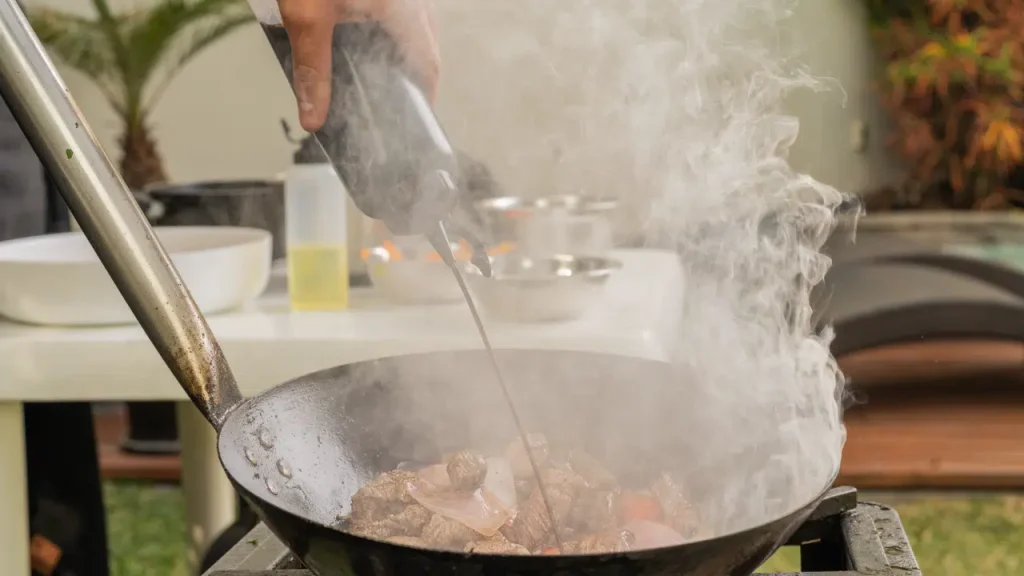
Burnt cooking odors can linger long after the ruined food is gone because smoke particles and greasy residue settle on nearby surfaces. Removing the source, improving airflow, and cleaning the areas that captured the odor usually works better than simply spraying fragrance into the room.
Remove the Burnt Source Immediately
Move the burned food, disposable packaging, and badly scorched residue out of the kitchen as soon as it’s safe. Leaving the source in a trash can beneath the sink keeps releasing odor into the room.
Once hot cookware has cooled, clean it rather than leaving it on the stove overnight. Burned oils can continue producing a noticeable smell even when no smoke is visible.
If there is active smoke or fire, deal with the immediate safety issue first rather than focusing on odor removal.
Increase Air Exchange Through the Room
Run an externally vented range hood if you have one and open windows where practical. Creating airflow helps move smoky air outdoors instead of allowing it to circulate through nearby rooms.
Useful kitchen ventilation discussions can also help homeowners think about hood placement, cooking zones, and everyday habits that limit lingering food smells.
If you’re using a portable fan, position it to move indoor air toward an open window rather than simply stirring the same air around the kitchen.
Check the Range Hood Filter
A greasy filter can hold odors from previous cooking sessions. Cleaning or replacing it according to the manufacturer’s instructions can improve airflow and reduce the smell trapped around the cooking area.
| Odor Source | What to Do | Why It Helps |
|---|---|---|
| Burnt food | Remove it | Stops new odor |
| Smoky indoor air | Vent outdoors | Exchanges stale air |
| Greasy surfaces | Wash them | Removes residue |
| Dirty hood filter | Clean or replace | Reduces trapped smell |
Clean Surfaces That Captured Smoke
Wipe the stovetop, backsplash, cabinet fronts, nearby counters, and other washable surfaces. A mild cleaning solution appropriate for the material is usually better than masking the odor with perfume.
Regular home cleaning routines are especially useful after smoky cooking because odor often survives on surfaces that look clean from a distance.
Don’t forget fabric. Dish towels, oven mitts, curtains, and washable rugs can absorb smoke and may need laundering.
Pay Attention to Walls and Other Porous Finishes
A single burnt meal usually doesn’t require major wall cleaning, but repeated smoke exposure can leave residue on painted surfaces. Use a cleaning method that’s safe for the specific paint or finish.
People reviewing wall finish and décor options may also want to consider how easily a kitchen surface can be cleaned, particularly around the cooking zone.
Cabinet tops and upper wall areas deserve attention because warm air carries grease and smoke upward.
What People Often Get Wrong About Kitchen Odors
Strong fragrance doesn’t actually remove smoke residue. It creates a second smell that may temporarily compete with the first.
Another mistake is cleaning only the obvious pan or oven. Burnt odors can settle on the hood filter, cabinet doors, cloth items, and nearby walls. Treat the room as a collection of surfaces rather than assuming the smell remains suspended only in the air.
Frequently Asked Questions
How long do burnt cooking smells usually last?
Duration depends on how much smoke was produced, ventilation, and the surfaces involved. Mild odors may clear fairly quickly, while smoke absorbed by fabrics or greasy surfaces can remain until those materials are cleaned.
Does baking soda remove burnt smells?
Baking soda may help absorb some odors in certain settings, but it won’t replace ventilation and physical cleaning when smoke or grease has coated kitchen surfaces.
Why does my kitchen still smell burnt after cleaning?
Check hidden odor sources such as hood filters, trash containers, oven interiors, dish towels, cabinet tops, and nearby fabrics. One overlooked area can keep releasing the smell.
Clear the Residue, Not Just the Air
Fresh air is only the first part of the solution. Remove the burned source, vent the room, clean greasy surfaces, and wash fabrics that absorbed smoke.
Burnt cooking odors disappear faster when you target what caused them and where the residue settled. Once the room is clean, normal kitchen airflow can finish the job without relying on layers of artificial fragrance.