
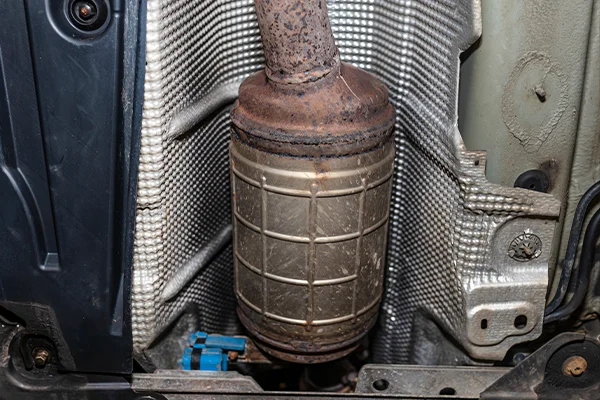
A new metallic rattle underneath a vehicle deserves more attention than turning up the radio. Loose exhaust parts can vibrate against the body, suspension, shields, or nearby components as the engine moves. Finding the source early may prevent a small bracket, hanger, or shield problem from causing additional exhaust damage.
Where Exhaust Rattles Commonly Begin
The exhaust system is mounted beneath the vehicle using brackets and flexible hangers that allow controlled movement. Corrosion, impact damage, damaged rubber supports, or loosened hardware can allow components to move more than intended.
Heat shields are another frequent source of buzzing or rattling. Because they are thin pieces of metal, a loose fastener can create surprisingly loud noise even when the exhaust pipe itself remains intact.
Listen to When the Sound Appears
A rattle heard mainly at idle may have a different cause from one that appears over bumps. Drivers reviewing common automotive issues should note whether the sound changes with engine speed, road movement, or temperature because those observations can make inspection easier.
Why a Small Rattle Can Become a Larger Repair
If an exhaust section isn’t supported correctly, its weight may place added strain on joints, welds, or neighboring hangers. Continued movement can also cause one component to contact another repeatedly.
Vehicle owners exploring practical driving information may be tempted to ignore noise if performance seems unchanged. Exhaust movement can worsen gradually, however, so silence isn’t the only reason to repair the mounting problem.
| Noise Pattern | Possible Area | What to Check |
|---|---|---|
| Buzzing at idle | Heat shield | Fasteners and clearance |
| Clunk over bumps | Hanger or mount | Exhaust movement |
| Deep exhaust noise | Pipe or joint | Leakage or damage |
| Rattle at certain RPM | Shield or contact point | Vibration source |
Inspect More Than the Noisy Spot
The loudest location isn’t always where the underlying problem began. A broken hanger farther forward can allow the exhaust to shift until a rear section touches the body.
Information about vehicle condition and ownership often emphasizes major repairs, but mounting hardware deserves equal diagnostic attention when noise starts underneath the car. Replacing a failed hanger early can protect heavier exhaust sections from repeated stress.
Look for Signs of Exhaust Leakage
Noise accompanied by a stronger exhaust smell, visible corrosion, or a noticeably louder exhaust note may indicate more than a loose bracket. Exhaust leaks require proper inspection because gases should remain contained within the designed exhaust path.
Mistakes That Can Hide the Real Problem
Pushing or bending a heat shield away from another component may silence a rattle temporarily, but it doesn’t explain why the clearance changed. A missing fastener, damaged mount, impact, or corroded bracket could still be present.
Another mistake is assuming every underbody rattle comes from the exhaust. Suspension parts, underbody panels, spare-wheel hardware, and other components can produce similar sounds. Identifying the exact source before replacing parts avoids unnecessary work.
Have Persistent Exhaust Noise Checked
Pay attention to whether the rattle appears during acceleration, idle, startup, cornering, or rough roads. Those details help narrow the possible causes and can make diagnosis faster.
If the exhaust is hanging noticeably lower than usual, contacting other components, or producing a strong exhaust smell, arrange an inspection promptly. Avoid crawling under a vehicle that is supported only by a jack; proper lifting equipment is necessary for safe underbody inspection.
Frequently Asked Questions
Can a loose heat shield cause a loud rattling sound?
Yes. Thin metal heat shields can vibrate rapidly when a mounting point loosens or corrodes. The sound may change with engine speed because exhaust vibration changes as RPM rises.
Is an exhaust rattle always expensive to repair?
No. Some rattles come from relatively simple mounting or shield problems. Others involve damaged exhaust sections, so the cost depends on what inspection finds rather than the loudness of the noise.
Can I keep driving with a loose exhaust?
That depends on the cause and severity. A minor shield rattle differs from a damaged or hanging exhaust section. Prompt inspection is sensible if the system appears loose, leaks, or contacts other components.
Fix the Source Instead of Living With the Noise
An exhaust rattle is useful information from the vehicle. Identify whether the problem involves a heat shield, hanger, bracket, pipe, or another underbody component, then repair the actual cause. Loose exhaust parts are usually easier to address before repeated movement damages joints or turns a small noise into a larger exhaust-system problem.