Engine cooling failure can turn a routine drive into an overheating event with little warning. Coolant leaks, circulation problems, fan failures, thermostat faults, radiator restrictions, and pressure loss can all prevent the system from controlling engine temperature.
After an overheating episode, finding the original cause matters more than simply refilling the coolant and continuing to drive.
Start With Coolant Loss and Visible Leaks
Coolant can escape from hoses, radiator seams, water-pump areas, reservoir connections, heater components, or gaskets. Some leaks appear only when the system is hot and pressurized.
Drivers reviewing cooling system resources may see many possible leak locations, so checking for residue, wet areas, damaged hoses, and changes in reservoir level can help narrow the search.
Never remove a radiator or pressurized coolant cap while the system is hot. Scalding coolant and steam can escape suddenly.
Check Whether Coolant Is Circulating
A cooling system can be full yet still overheat if coolant cannot move correctly. A thermostat that does not open, damaged water-pump impeller, collapsed hose, trapped air pocket, or severe internal restriction can reduce circulation.
General engine cooling references may explain these components, but testing should follow the specific cooling-system design used by the vehicle.
| Cooling Problem | Typical Clue | Likely Check |
|---|---|---|
| External leak | Falling coolant level | Pressure test |
| Fan problem | Overheats at low speed | Fan operation |
| Thermostat issue | Rapid temperature rise | Temperature comparison |
| Flow restriction | Persistent overheating | Radiator and pump checks |
Confirm Radiator Fan Operation
Electric cooling fans are especially important when the vehicle is moving slowly or sitting in traffic because little natural airflow passes through the radiator.
Fan motors, relays, wiring, control modules, temperature sensors, and commands from the engine computer can all affect operation. Broader vehicle cooling information can help owners understand the system layout without assuming the fan itself is automatically defective.
Keep fingers, tools, and clothing away from electric fans. Some can start unexpectedly even when the engine is not running.
Check System Pressure and the Radiator
Cooling systems operate under pressure to control coolant behavior at high temperature. A weak cap or pressure leak may allow coolant loss and reduce the system’s ability to operate correctly.
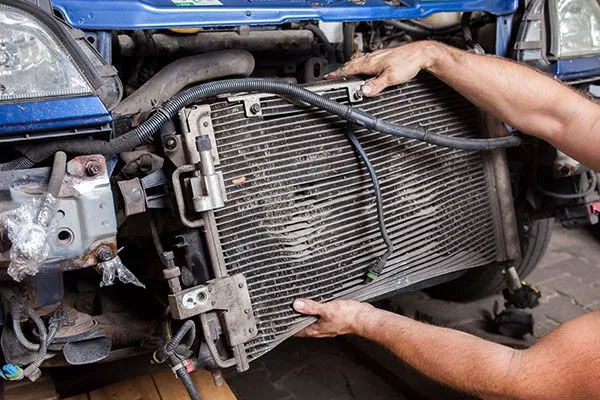
Radiator airflow also matters. Bent fins, debris, internal deposits, or restricted passages may limit heat transfer even when the coolant level appears normal.
Consider Internal Engine Problems
If coolant repeatedly disappears without an obvious external leak, further testing may be needed. Certain internal gasket, cylinder-head, or engine problems can allow coolant to enter areas where it should not.
Supporting symptoms may include repeated pressure buildup, contaminated fluids, unusual exhaust vapor, or persistent overheating.
Why Refilling Coolant Is Not a Repair
Adding coolant after an overheating event may temporarily lower the temperature, but it does nothing to fix a leak, failed fan, circulation problem, or pressure fault. Repeated overheating can cause progressively more expensive damage.
Another common mistake is pouring cold liquid into a severely overheated engine immediately. Sudden temperature changes can place additional stress on hot components. Shut the vehicle down safely and allow it to cool before inspection.
Frequently Asked Questions
Why does my car overheat only in traffic?
Overheating mainly at low speed can point toward inadequate radiator airflow, making cooling-fan operation an important area to inspect. Other cooling-system faults can still produce similar behavior.
Can a bad thermostat cause repeated overheating?
Yes. A thermostat that fails to open correctly can restrict coolant circulation and cause temperature to rise rapidly. Testing is needed because water-pump, radiator, and coolant-loss problems can look similar.
Should I drive after my engine overheats?
Continuing to drive an overheating engine can increase the chance of serious damage. Stop in a safe location, shut the engine off, allow it to cool, and identify the cause before normal driving resumes.
Fix the Cause Before the Next Trip
After engine cooling failure, treat the temperature spike as evidence of an unresolved problem. Check coolant level only when safe, look for leakage, verify fan operation, evaluate circulation, and pressure-test the system when appropriate. Correcting the actual fault before returning to regular driving reduces the chance that another overheating episode will cause major engine damage.