
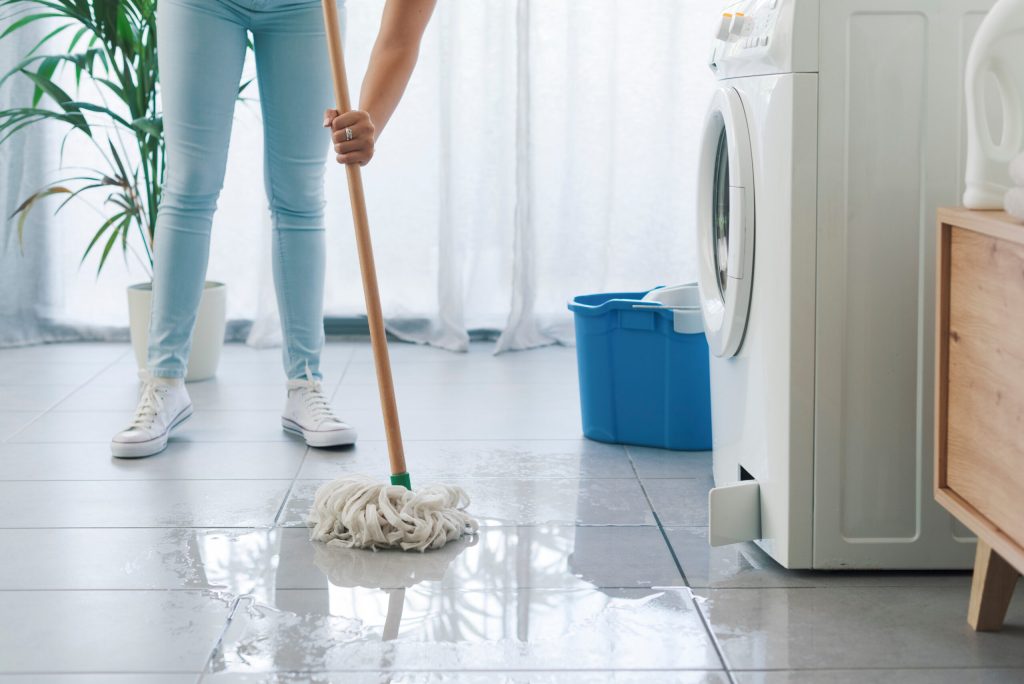
A washing machine leak can release enough water to damage flooring, baseboards, cabinets, and rooms below the laundry area. The safest first response is to stop the cycle, unplug the machine when it can be reached safely, and shut off the water valves. Then determine whether the leak came from a hose, connection, drain, dispenser, door, or the machine itself.
Find Out When the Leak Happens
Timing provides useful clues. Water appearing while the machine fills suggests a supply-side problem, while leakage during draining may point toward the drain hose, standpipe, pump, or internal drain system.
A leak that develops during agitation or spinning can involve different components. Watch from a safe distance during a short test only after obvious damage has been corrected.
Inspect the Floor Before Retesting
Dry the surrounding area completely. Water from an earlier spill can travel beneath the machine and make a repaired leak appear active.
If an electrical outlet, plug, or extension connection has become wet, do not handle energized equipment. Disconnect power safely at the breaker if necessary.
Check the Hot and Cold Supply Hoses
Inspect both hose connections at the wall valves and at the washing machine. Look for corrosion, bulging, cracks, loose fittings, and wetness around the threaded connections.
Homeowners planning laundry-room repairs can pair plumbing inspections with home renovation ideas when considering flooring, drainage, storage, and appliance placement.
Replace visibly damaged hoses rather than trying to seal a weakened section. A deteriorating pressurized supply hose can fail more severely than a slow drip suggests.
Inspect the Drain Hose and Standpipe
The drain hose should remain secure without being crushed, sharply kinked, or inserted incorrectly into the standpipe. Water overflowing from the standpipe can indicate a household drain restriction rather than a washer failure.
Useful laundry setup guidance can help keep storage and furniture from pressing against hoses behind the appliance.
Observe where the water originates during drainage. If the standpipe fills rapidly and spills over, stop the machine because continuing to pump water into a restricted drain can quickly flood the room.
| When Water Appears | Likely Area | What to Inspect |
|---|---|---|
| During filling | Supply hoses | Fittings and hose condition |
| During draining | Drain system | Hose and standpipe |
| Front-load door | Door seal | Debris or damaged gasket |
| Under machine | Internal parts | Pump, tub, connections |
Check the Door Seal and Detergent Area
Front-loading washers can leak around the door if debris, hair, or small fabric items interfere with the gasket. Cracks or tears in the rubber seal can produce a more persistent leak.
Laundry-room interior care resources may also help with keeping the space accessible enough to spot moisture early rather than hiding hoses and connections behind clutter.
Excess detergent or the wrong detergent type can create excessive suds in some high-efficiency machines. Foam may escape through areas that normally remain dry.
Repairs That Shouldn’t Be Improvised
Tape is not a dependable repair for a damaged water-supply hose. Pressurized hoses need to be structurally sound, and replacing a questionable hose is safer than trying to patch it.
Avoid repeatedly tilting or moving a heavy washer without proper help because machines can be unstable and hoses can be pulled loose. If water is coming from the pump, tub, internal hose connections, or bearings, diagnosis usually requires opening the cabinet and may be better handled by a technician.
Frequently Asked Questions
Why does my washing machine leak only during the spin cycle?
Spin-cycle leakage may involve internal movement, a damaged door gasket, drain-system trouble, or water that was previously trapped inside the cabinet. Determining the exact point where moisture first appears is more useful than relying on cycle timing alone.
Can too much detergent make a washer leak?
Yes. Excessive suds can interfere with normal washing and may force foam or water through seals, dispenser areas, or vents. Use the detergent type and amount recommended for the specific washing machine and the load being washed.
How often should washing machine hoses be inspected?
Check them routinely and whenever the machine is moved. Look for bulges, corrosion, cracking, worn fittings, or fresh moisture. Replacement timing depends on hose material, condition, manufacturer guidance, and the environment around the appliance.
Protect the Floor by Finding the Source First
Don’t keep running a washer simply to see whether a leak disappears. Shut off the water, dry the area, and inspect the supply hoses, drain system, door seal, and detergent area in a logical order. Visible hose damage should be corrected promptly, while leaks from internal pumps, tubs, wiring areas, or inaccessible connections usually justify professional service.