
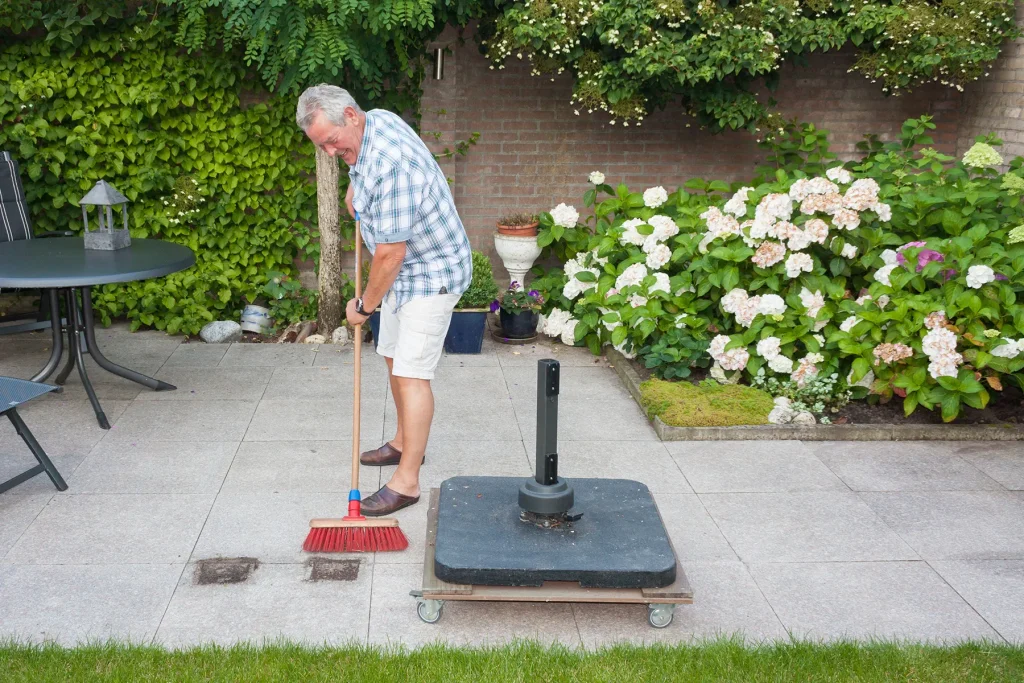
Dirty patio tiles collect more than ordinary dust. Soil, leaves, algae-like surface growth, food spills, traffic marks, and weather residue can build up together. Cleaning becomes easier when loose debris is removed first and the remaining grime is treated in manageable sections rather than attacking the entire patio with maximum pressure.
Clear the Patio Before Washing
Move lightweight furniture, planters, mats, and loose objects out of the work area. Sweep leaves, soil, twigs, and grit before adding water.
Pay special attention to corners and tile joints. Wetting loose soil too early creates muddy runoff that settles somewhere else.
Check for Damaged Areas
Look for loose tiles, cracked grout, or unstable edges before scrubbing. High pressure or aggressive brushing can worsen existing damage.
Loosen Grime in Small Sections
Pre-wet a manageable patch, then apply a cleaner suited to the tile material. Give it the recommended contact time without letting the product dry on the surface.
Outdoor planning ideas shown in patio layout inspiration often include zones for furniture, plants, and foot traffic. Cleaning those zones separately can make a large patio less awkward to tackle.
| Patio Condition | Good First Step | Potential Problem |
|---|---|---|
| Loose soil | Sweep thoroughly | Muddy runoff |
| General grime | Mild cleaner and brush | Over-scrubbing |
| Dirty joints | Targeted soft brush | Grout damage |
| Heavy buildup | Repeat treatment | Excessive pressure |
Scrub According to the Surface
Use a deck brush or suitable hand brush rather than reaching immediately for the stiffest bristles available. Textured tile may need more brushing than smooth glazed surfaces.
People gathering outdoor styling ideas may focus on how patios look after furnishing. Maintenance is easier, though, when furniture feet, rugs, and planters can be moved without trapping damp debris underneath.
Work Toward Drainage
Plan where dirty water will travel before rinsing. Move grime toward a suitable drainage direction rather than washing it against walls, doors, or cleaned sections.
Rinse and Inspect Before Repeating
A first cleaning may remove most surface soil while leaving a few stubborn areas. Rinse well and inspect the tile after the dirty water is gone.
Broader exterior home references can help with future material choices and outdoor layouts. For existing tiles, repeated moderate cleaning is often safer than one aggressive session using excessive force.
Where Patio Cleaning Often Goes Wrong
Pressure washing can look like the fastest answer, but excessive pressure may damage grout, surface coatings, or softer materials. If you use powered equipment, follow the flooring manufacturer’s guidance and start conservatively.
Another mistake is letting cleaning solution dry in direct sun. Work in smaller sections during milder conditions when possible. And don’t mix different cleaners in hopes of creating a stronger formula.
Frequently Asked Questions
Can I pressure wash patio tiles?
Some outdoor tiles tolerate pressure washing, while others or their grout may be damaged. Confirm the material’s care guidance and use conservative settings rather than assuming every patio surface can handle strong pressure.
How can I clean patio grout?
Sweep first, wet the area, and use a grout-safe cleaner with an appropriate brush. Avoid metal brushes unless specifically approved because they can scratch tile and damage joint material.
Why do patio tiles become dirty again quickly?
Nearby soil, leaf litter, shaded damp areas, foot traffic, drainage problems, and uncovered furniture zones can all contribute. Frequent sweeping reduces the amount of organic debris available to form stubborn buildup.
Make the Next Cleaning Easier
Patio grime is easiest to control before layers accumulate. Sweep regularly, remove leaves from damp corners, and deal with spills before they weather into the surface. During deeper cleaning, work section by section and choose tools that respect the tile and grout. Consistent moderate care usually beats occasional aggressive cleaning.