
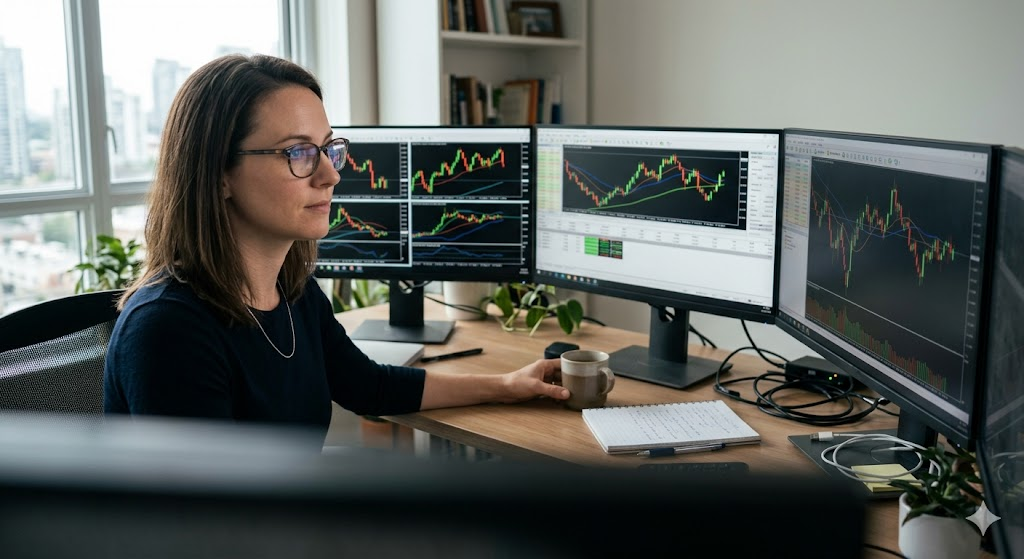
You set a trade before lunch, check it again at 2:17, and suddenly your brain has created three completely different stories about what the chart is “about to do.” Maybe you move the stop. Maybe you close early. Maybe you enter again because the last candle looked convincing. Forex has a funny way of making calm people behave like they’re trying to win an argument with a screen.
Why Emotions Get So Loud in Forex Trading
Forex moves fast enough to mess with your patience, but slow enough to keep you staring. That combination is underrated. You’re not just reacting to price. You’re reacting to hope, annoyance, boredom, and that tiny sting from the trade you messed up yesterday.
The chart starts feeling personal
A trade goes slightly against you, and suddenly it feels like the market saw you coming. Of course it didn’t. But in the moment, your brain treats a normal pullback like a personal insult.
Honestly, that’s where many poor decisions begin. Not with bad strategy, but with a bruised ego.
Waiting becomes harder than entering
Entering a trade feels active. Waiting feels uncomfortable. That’s why people fiddle with trades that were fine five minutes earlier.
You’ll notice this especially during quiet sessions. The setup may still be valid, but your patience starts looking for something to do.
Losses create weird little habits
After one bad morning, you might reduce your next trade too much. Or double it. Neither move comes from the plan. It comes from wanting to feel better quickly.
And that’s the trap.
How Software Removes the Heat From the Moment
Automated forex trading software does not magically make someone disciplined. To be fair, that would be too convenient. What it can do is remove some of the messy, emotional clicking that happens between your plan and the actual trade.
Rules get followed even when your mood changes
If your system says enter after certain conditions line up, the software follows that logic. It doesn’t care whether you feel confident, nervous, or annoyed from your last trade.
That sounds basic, but it matters. A rule followed consistently is very different from a rule followed only when you feel brave.
You stop negotiating with yourself
Manual trading often turns into a quiet debate. Should I wait? Should I close? Is this pullback normal? Maybe the next candle will fix it.
Software cuts down that back-and-forth because the decision was made earlier. You still choose the rules, but you’re not wrestling with every small move in real time.
The boring parts stay boring
Some trading tasks are repetitive by nature. Watching for the same setup across sessions. Checking whether price reached a level. Managing exits without overthinking.
A tool can handle those parts without turning them into drama. That’s also why someone comparing different automation tools might run into a term like futures trading bot while researching systems that execute preset trading rules.
Where Automation Helps Most
The best use of automation, in my opinion, is not replacing thought. It’s protecting your earlier, calmer thinking from your later, twitchier self. That distinction matters more than people admit.
It keeps revenge trading at arm’s length
Picture a trader in 2021, sitting through a choppy London morning, taking two small losses in a row. The next impulse is obvious: win it back.
Software can’t feel embarrassed. If the next setup is not there, nothing happens. That pause can save you from a trade you only wanted because the last one hurt.
It makes exits less emotional
Exits are where people often get strange. They cut winners too soon, then give losers extra room because “it might turn around.”
With automation, exits can follow the same conditions each time. Not perfectly. Not magically. But more evenly than a tired person watching candles at midnight.
It reduces screen-staring
The more you stare, the more you invent. A tiny movement starts looking meaningful. A normal candle starts feeling like a warning.
Automation lets you step back a bit. You still review what happened, but you don’t need to babysit every tick like it owes you an explanation.
What Automation Cannot Fix
People sometimes talk about trading software like it removes all human error. Not exactly. You can automate a bad idea just as easily as a good one. The software only follows what you tell it to follow.
Bad rules stay bad rules
If the strategy is sloppy, automation won’t clean it up. It may even expose the problem faster because the rules get applied without hesitation.
That can be useful, weirdly enough. A weak plan becomes harder to excuse when it plays out exactly as written.
You still need review time
You can’t just switch something on and pretend the job is done. Markets change, spreads vary, and conditions that looked decent in one period may feel awkward later.
At some point, you still have to sit down and review the trades like an adult. Nobody enjoys that part much, but skipping it is how small problems become habits.
Control does not mean constant interference
This is a pet peeve of mine: people say they want automation, then manually override it every time they feel uncomfortable. That defeats the whole purpose.
You need room to intervene if something clearly breaks. But if you override every normal trade, you’re just manual trading with extra steps.
A Calmer Way to Participate
Automated forex trading software works best when you treat it like a buffer between your plan and your impulses. It will not make trading easy, and it will not remove responsibility. But it can stop a nervous hand from turning one ordinary setup into five unnecessary decisions. That alone is useful. The future of trading probably belongs less to fearless people, and more to people who build systems that protect them from themselves.